Economics, News

IMPROVED DATA COLLECTION AND ANALYSIS TO ENHANCE WORKPLACE SAFETY

http://timescaribbeanonline.com/improved-data-collection-analysis-enhance-workplace-safety/ #

Published 25 April 2017


Basseterre, St. Kitts, April 25, 2017 (SKNIS): The Department of Labour in St. Kitts has taken steps to improve its data collection and analysis in keeping with efforts to advance the decent work agenda, which calls for opportunities for work that are productive with a fair income in a safe environment while fulfilling its regional and international obligations.

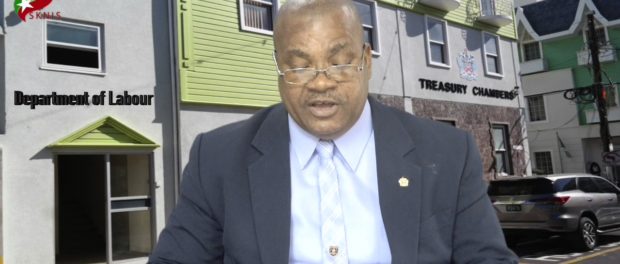
This was emphasized on Tuesday, April 25, by the Acting Permanent Secretary in the Ministry of Labour, Ron Dublin-Collins, while giving an address to recognize the World Day for Safety and Health at Work, which is celebrated internationally on April 28 each year. The theme for 2017 is “Optimize the Collection and Use of Occupational Safety and Health (OSH) Data.”

“The time has come for us to begin to focus on the critical need to improve our capacity to collect and utilize reliable occupational safety and health data,” Acting Permanent Secretary Dublin-Collins stated, noting that such data are considered “indispensable” in detecting new hazards and risks, developing preventative measures, and implementing new policies, systems and programmes to address such.

To streamline the process, government has employed a statistical officer for the Department of Labour in March this year, who is responsible for collecting and analyzing data. Additionally, in February 2017, labour staff members and other stakeholders in St. Kitts and Nevis were briefed about, and trained to use software for the Caribbean Community’s Labour Market Information System (CLMIS) expected to be implemented in June 2017. It will serve as a database that informs CARICOM member countries of the availability of labour and employment. Mr. Dublin-Collins said “this is another step in the right direction for enhancing the collection and optimization of OSH data.”

The acting permanent secretary also explained that plans are in place to increase the number of labour inspectors, who carry out regular visits to places of employment in order to assess the working environment, and have friendly engagements with employers and employees.

All of the local plans are contained in nine priority areas designed to improve the efficiency and effectiveness of the department. These are Institutional Strengthening of the Department and the Building of the Capacity of Staff; Updating the Labour Legislation; Enhancing the Labour Inspectorate; Educating the Public, Enhancing the Employment Mechanism and the Statistics Unit in the Ministry and Department of Labour; Enhancing the Social Protection System; Industrial Relations; International Relations; and Making Tripartism and Social Dialogue Central Themes for the Creation of Public Policies in Labour.

Several activities will be held this week to mark the observance of World Day for Safety and Health at Work. On Wednesday, April 26, (tomorrow) the Department of Labour will host a Safety and Health Symposium highlighting the importance of having a safe and secure work environment. Forty representatives from the manufacturing, hospitality and construction sectors will participate at the event slated for the Conference Room of Her Majesty’s Customs and Excise Department at Bird Rock. On Friday, April 28, a T-shirt Awareness Day will help to remind/educate the public on the matter and an awareness display will also be mounted at the Labour Department on Church Street. Also on that day, the Department of Labour in Nevis in conjunction with the Nevis Disaster Office will host an awareness rally. A church service on Sunday, April 30, wraps up the activities.
Read More...

Economics, Education, Local news, News

INTENSIVE TRAINING CONTINUES IN AN EFFORT TO INCREASE AWARENESS OF THE IMPACTS OF CLIMATE CHANGE

Published 19 April 2017

Basseterre, St. Kitts, April 19, 2017 (SKNIS): The Department of Environment recognizes climate variability and climate change to be two of the most significant threats to sustainable development in St. Kitts and Nevis. Against this backdrop, a number of persons from various fields throughout the federation are currently attending an eight day National Training Workshop in the Use of Climate Models for Decision Making.

The workshop, which runs from April 19-28, is held under the auspices of the Caribbean Community Climate Change Center (CCCCC) and the United States Agency for International Development (USAID).

June Hughes, Senior Environment Officer at the Department of Environment, said that the training is timely, as climate change continues to be a clear and present danger. She noted that the department is working closely with regional and international partners to ensure that persons are aware of the dangers that exist.

“We in the Department of Environment have been working to raise awareness on the impacts of climate change, while taking advantage of every capacity building opportunity to improve our adaptive response have strengthened our mitigation measures,” she said. “Each training, workshop and meeting strengthens our country to address and reduce the impacts of climate change.”

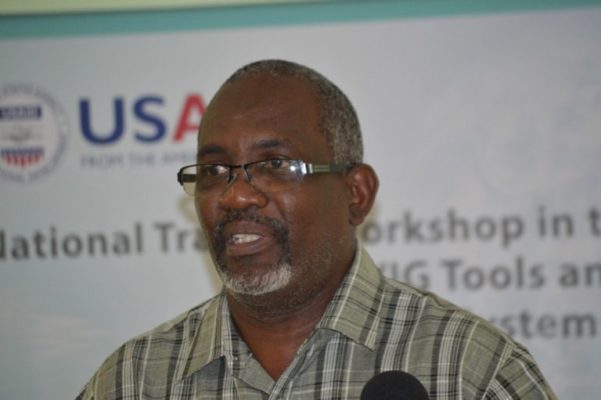
Dr. Ulric Trotz, Deputy Executive Director at CCCCC, explained that the workshop would first be rolled out nationally in all 10 countries under the USAID banner, after which regional workshops will be held. He made mention of specific training tools that were developed with the aim of assisting in the generation of scientific information and analysis to help in making informed decisions. These include the Weather Generator (WG), the Tropical Storm Model/ Simple Model for the Advection of Storms and Hurricanes (SMASH), and the Caribbean Drought Assessment Tool (CARiDRO).

“The CARIWIG [Caribbean Weather Impacts Group] tool is a critical tool in that it more or less localizes the projection so that for instance, you can actually look at climate projections for the future in a watershed in St. Kitts and Nevis. It localizes that information and it makes it much more relevant to the local circumstance,” said Dr. Trotz.

The deputy executive director encouraged participants to acquire all the knowledge necessary, as it is the presenters hope that at the end of the training “a cadre of technical skills” would be developed in St. Kitts and Nevis and the region on whole that would help to deal successfully with the challenges faced from climate change.

Training and application of the tools will allow decision-makers to better understand the potential impacts of drought, tropical storms, and rainfall and temperature changes. When combined with other data and information, they can help to build a picture of potential impacts to key economic sectors in the country. The training will target key personnel whose focus are in areas of agriculture, water resources, coastal zone management, health, physical planning or disaster risk reduction.

Read More...

Economics, Education, News

GOVERNMENT OF ST. KITTS AND NEVIS WORKS ASSIDUOUSLY TO TACKLE THE IMPACTS OF CLIMATE CHANGE

Published 19 April 2017

Basseterre, St. Kitts, April 19, 2017 (SKNIS): The Government of St. Kitts and Nevis has positioned itself to address some environmental challenges, in particular, global warming, in an effort to improve informed decisions on issues like climate change, said Alistair Edwards, Permanent Secretary in the Department of Environment.

Speaking at the opening ceremony for the National Training Workshop in the Use of Climate Models for Decision Making on Wednesday, April 19, the permanent secretary said that climate change affects everyone, therefore, the Department of Environment “will continue to undertake various adaptation and mitigation actions to ensure that St. Kitts and Nevis builds its resilience to reduce the impacts on climate change.”

Mr. Edwards said that St. Kitts and Nevis is very vulnerable to adverse impacts of climate change, as it can be seen in a number of sectors across the federation.

“Sectors such as tourism, agriculture, water, and health and by extension the entire nation, have already been impacted in one way or another by these adverse factors. In response to the current projects it impacts, it is important that St. Kitts and Nevis undertake various initiatives that will reduce risk and the risk of our natural assets from climate change,” said the permanent secretary, while adding that St. Kitts and Nevis recognizes that climate change impacts the sustainability of not only the federation, but also the region.

“For a country like St. Kitts and Nevis, our critical infrastructure lies on coastal zones. Therefore, it is immensely important that measures and actions are put in place to protect our beaches and coastlines. We must implement measures that ensure food security, public health, the availability of fresh and potable water are not impacted,” he said.

PS Edwards made specific mention of the national training workshop, noting that the Department of Environment sees it as an ideal opportunity to build work that has already started. He explained that adaptation is critically important to St. Kitts and Nevis, and as such, it should be made a priority.

“We need to identify and implement adaptation measures in a collaborative manner. We need to ensure that the decision makers have access to the most effective tools and methods that can help them integrate climate change into planning and investment processes,” said Mr. Edwards. “The approach of tackling adverse impacts of climate change requires the support of all us. Our planet is dependent on it and our very existence is depending on it.”

Read More...

Business, Economics

IMF officials to meet with St. Kitts and Nevis Opposition Leader

Published 17 April 2017

BASSETRERRE, ST. KITTS, April 16th 2017 – The Washington-based International Monetary Fund (IMF) is to hold talks with Leader of the Opposition, the Right Hon. Dr. Denzil L. Douglas.


The IMF officials will meet with Dr. Douglas, the former Prime Minister and Minister of Finance and members of the Federal Parliamentary on April 26th.


Members of the Parliamentary Opposition comprise lawmakers representing the Nevis Reformation Party (NRP) and the St. Kitts-Nevis Labour Party (SKNLP), the largest political party in the Federation.


During the April 18th to May 3rd visit, the IMF delegation will also meet with the Prime Minister and the Federal Cabinet, the Premier of Nevis and the NIA Cabinet, officials of the Ministry of Finance and relevant ministries, the St. Kitts and Nevis Chamber of Industry and Commerce, bankers, the Eastern Caribbean Central Bank (ECCB), and other interested groups and individuals.


The international financial institution consults annually with each member government through contacts, known as “Article IV Consultations,” during which the IMF attempts to assess each country’s economic health and to forestall future financial problems.


St. Kitts and Nevis became a member of the IMF in 1983.


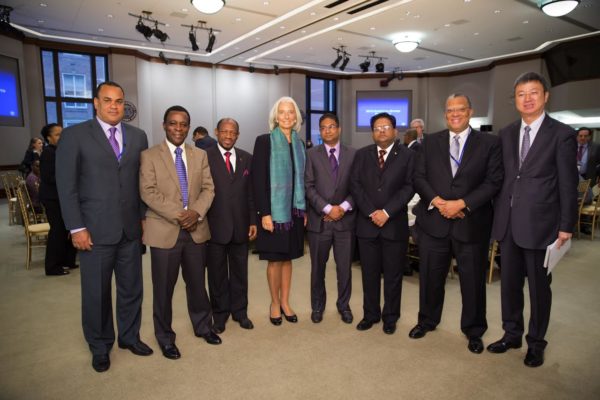
FILE PHOTO: (from left to right: Bahamian Minister of State for Finance Michael Halkitis, Grenadian Prime Minister Keith Mitchell, St Kitts and Nevis’ Prime Minister Dr. Denzil Douglas, IMF Managing Director Christine Lagarde, Trinidad and Tobago’s Central Bank Governor Jwala Rambarran, Guyanese Finance Minister Dr Ashni Singh, Jamaican Finance Minister Michael Phillips and IMF Deputy Managing Director Min Zhu

Read More...

Economics, International news, News

The $2 Dollar Bill is America’s Rarest Current

http://www.2dollarbill.org/2-bill-history.html #

Published 12 April 2017

$2 Bill History
The $2 Dollar Bill is America’s Rarest Current Denomination of US Currency

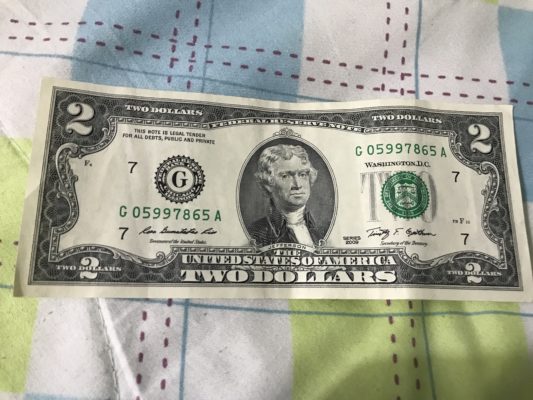
The $2 dollar bill is America’s rarest small denomination in the US Currency. The unique history of the $2 bill has given the note an air of mystery and legend. If you have a $2 dollar bill in your wallet, it is always an instant conversation starter at parties and events where tipping is appropriate. This page outlines the history of the $2 dollar bill along with its many changes over the years.

History
On 25 June, 1776, the Continental Congress authorized the issue of two-dollar bills of credit for the defense of the America. Only 49,000 bills were issued at that time. The two-dollar bill was first commissioned in March, 1862. The two-dollar denomination was discontinued from 1966 until 1976 when use of the two-dollar bill was resumed as part of the United States bicentennial celebration. The two-dollar bill was last issued in 2003.

How Rare is the $2 Dollar Bill?
Low printing numbers starting in the 1950s resulted in the $2 dollar bill becoming the rarest current denomination of US Currency. This rarity caused people to hoard any $2 bills they come across and as a result this decreased the circulation of the $2 dollar bill even more. Today the $2 dollar bill constitute around 1% of all notes in US circulation.

Growing Popularity of the $2 Dollar Bill
Today the $2 dollar bill is growing in popularity. In 2005 alone, 61 million $2 bills were printed. This is more than twice the number of $2 bills that were printed annually between 1990 and 2001.

One reason for the increased popularity is the $2 dollar bill is becoming more frequently used as change where tipping is encouraged. For example, $2 dollar bills are popular in some bars and night clubs, especially gentleman’s clubs and poker rooms. The reason many gentleman’s clubs give change using $2 bills is to encourage larger tips.The $2 dollar bill is also seen as a unique way to give a gift of money.

Is the $2 Dollar Bill Still in Circulation?
There is a common misconception that the $2 bill is no longer in circulation. However, that is not the case as the official Bureau of Engraving and Printing Web site lists the $2 Dollar Bill as one of the U.S. Currency Small Denominations.

What is a $2 Dollar Bill worth?
Typically the $2 bill is worth its face value. Special $2 bills have been made in recent years, however they are not worth anything more than face value on the collectors market and most current $2 bills are not worth much more than their face value.

Legends, Myths and Factoids
Several legends have arisen around the $2 dollar bill over time:
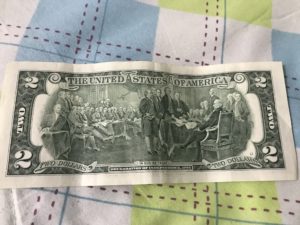
The scene of the Declaration of Independence that appears on the bill’s reverse is not a perfect duplicate of the John Trumbull painting. Five figures were removed to make the image fit the bill
In 2004, President Jefferson’s estate and home Monticello had an admission price of $13. As a results most people required $2 dollars in change. The staff at Monticello would hand out $2 dollar bills featuring President Jefferson’s portrait as change for admission to his estate.
A two-dollar bill is often used as a tracer by small stores to track robberies. A store clerk can keep a two-dollar bill at the bottom of their one-dollar bill slot in the cash drawer with its serial number recorded in case of robbery.
In 2005 Stuart Woods wrote a novel called “Two Dollar Bill.” One of the major characters made it a point to always tip with two-dollar bills.
The two-dollar bill has a long association with horseracing and was popular at racetracks for placing a two-dollar bet.
Steve Wozniak, co-founder of Apple Computing, buys two dollars by the sheet from the Treasury Department. He then has them bound into a booklet and the bills act as “tear off” pages.

Sources:
http://www.moneyfactory.gov/small2denom.html
http://www.moneyfactorystore.gov/2currencysheetsbeptestsheet.aspx
http://www.tnttrader.com/History%20of%20the%20Dollar%20Bill.htm
http://www.suite101.com/content/twodollar-billfact-and-fiction-a161356
http://www.bbc.co.uk/dna/h2g2/A30652445
http://en.wikipedia.org/wiki/United_States_two-dollar_bill
http://en.wikipedia.org/wiki/Bureau_of_Engraving_and_Printing

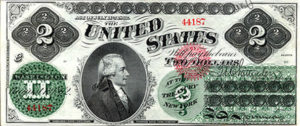
1862 $2 Legal Tender Note

In March 1862, the first $2 bill was issued as a Legal Tender Note.


This $2 bill features a profile portrait of Alexander Hamilton.
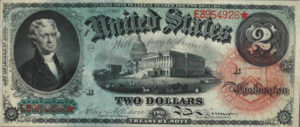
1869 $2 United State Note

By 1869 the $2 United States Note was redesigned with a portrait of Thomas Jefferson. to the left.

The $2 note also features a vignette of the United States Capitol in the center of the obverse (front).
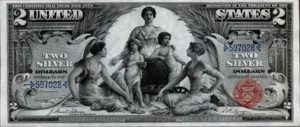
1896 “Educational Series” $2 Silver Certificate

This is an image of the Obverse (front) of the 1896 $2 “Educational Series” Silver Certificate.

This $2 note featured artwork of an allegorical figure of science presenting steam and electricity to commerce and manufacture.
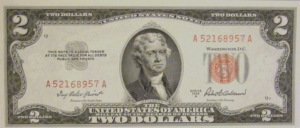
1952 $2 Dollar Bill


In 1953 the $2 bill received design changes similar to the $5 United States Note.

The treasury seal was made smaller and moved to the right side of the bill and it was superimposed over the gray word TWO.

The United States Note obligation also became superimposed over a gray numeral 2.

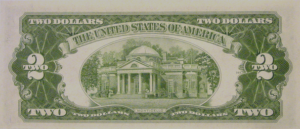
The reverse (back) featured Thomas Jefferson’s estate and home of Monticello in Virginia.

1976 Bicentennial $2 Dollar Bill

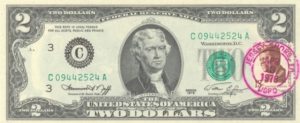
The $2 bills was officially discontinued in August 1966 until 1976 when the Treasury Department reintroduced the $2 bill as part of the United States Bicentennial celebration.

The $2 note was redesigned and issued as a Federal Reserve Note.
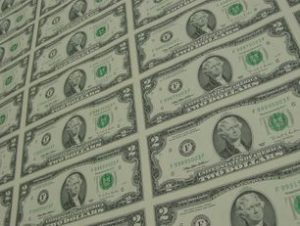
Uncut $2 Currency Sheets

Uncut currency sheets are available from the Bureau of Engraving and Printing.

Uncut sheets of $2 bills are available in various sizes. A 32-subject sheet, which is the original size sheet that the notes are printed on, is available. Other sheet sizes available have been cut from the original 32-subject sheet. These include half (16-note), quarter (8-note), and eighth (4-note) sheets for $2 bills.

Uncut sheets range in price from $21 to $90 from the Bureau of Engraving and Printing. Uncut sheets also come up frequently for auction online on eBay.
(c) 2011 – 2014 – $2 Dollar Bill Company – www.2DollarBill.org

Read More...